
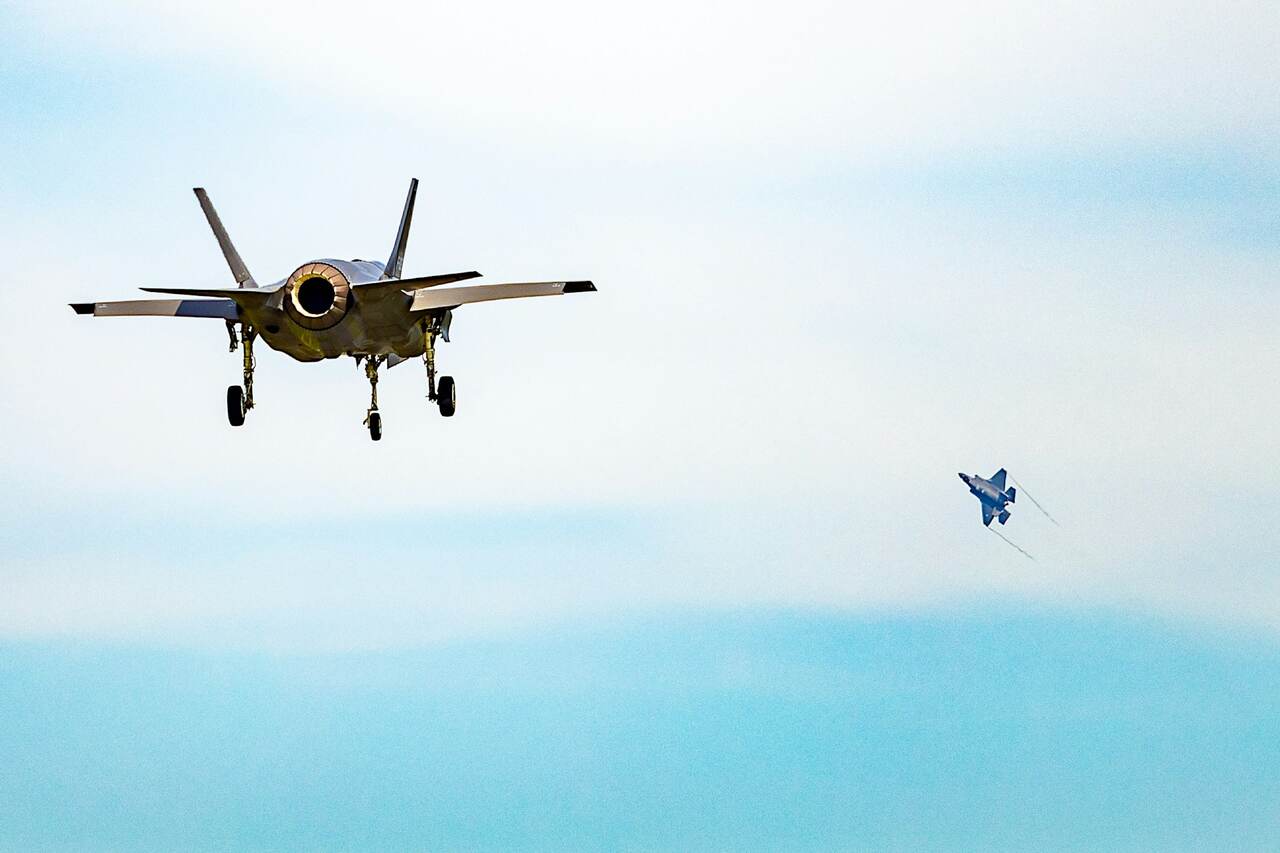
According to a report from the South China Morning Post, Chinese scientists have developed a system capable of detecting US stealth fighters from a distance of nearly 2,000 km.
In the report published last Tuesday (11), the site revealed that the system, developed by researchers from the Changchun Institute of Optics, Fine Mechanics and Physics (CIOMP), was tested in combat simulations over Taiwan.
The innovative solution, which is intended to be mounted on dirigible drones, analyzes infrared signatures of combat jets, such as the US Air Force’s next-generation F-35 fighter.
The research, published in May in the Chinese journal Aerospace Technology, shows that while the radar-absorbing coating and the exterior of the jet cooled to an average of 7.85°C, which helps avoid traditional detection, the engine exhaust plume reached nearly 726°C and emitted mid-wave infrared radiation three orders of magnitude stronger than its fuselage.
By focusing on the wavelength range of 2.8 to 4.3 micrometers, where atmospheric interference is minimal, and deploying mercury-cadmium-telluride detectors and 300 mm aperture telescopes, the dirigible could detect the rear thermal signature of an F-35 from over 1,800 km away when the aircraft is viewed from the side or from behind.
However, the innovation has some shortcomings. For example, front detection remained limited to just 350 km due to the stealth jet’s reduced front heat profile. The authors of the study noted that constellations of dirigibles, meaning larger fleets of networked drones, could overcome blind spots and increase their collective detection range.
Photo and video: Unsplash. This content was created with the help of AI and reviewed by the editorial team.
